HELOC vs. Home Equity Loan: Which Option Makes More Sense for Borrowing Against Your Home?
If you have owned your home for a few years, rising property values and regular mortgage payments mean you have likely built up substantial home equity. When a major expense arises—whether it is a vital roof replacement or a kitchen remodel—tapping into that equity is often a highly cost-effective way to borrow.
Two of the most common methods for accessing this wealth are a Home Equity Line of Credit (HELOC) and a Home Equity Loan.
While both options allow you to borrow against the value of your property without touching your primary mortgage, their mechanics are entirely different. One operates like an enormous credit card attached to your house, while the other functions as a traditional, straightforward loan.
Choosing the wrong structure can leave you paying unnecessary interest or struggling with unpredictable monthly payments. This guide breaks down the HELOC vs. home equity loan debate in plain English so you can choose the safest and most efficient tool for your finances.
What Is Home Equity?
Before choosing a borrowing method, you need to calculate what you actually have available. Home equity is simply the current market value of your property minus the amount you still owe on your mortgage.
For example, if your home would sell today for $400,000, and your remaining mortgage balance is $250,000, your total equity is $150,000.
However, you cannot borrow that entire $150,000. Lenders view borrowing against 100% of a home’s value as far too risky. Typically, a lender requires you to leave at least 15% to 20% of your equity untouched as a protective cushion.
The Core Difference: How the Money Is Delivered
Both a HELOC and a home equity loan are considered “second mortgages.” They sit directly behind your primary mortgage in priority. Because you aren’t replacing your first mortgage, you get to keep its interest rate—a massive advantage if you secured a very low rate years ago.
The fundamental difference between the two products is how the lender distributes the funds to you.
What Is a Home Equity Loan?
A home equity loan is a lump-sum loan. If you are approved to borrow $50,000, the bank deposits exactly $50,000 into your account on closing day.
-
The Rate: It almost always carries a fixed interest rate.
-
The Repayment: You begin making fixed, predictable monthly payments immediately, usually over a term of 5 to 15 years.
What Is a HELOC?
A HELOC is a revolving line of credit. It functions very much like a high-limit credit card secured by your house. If you are approved for a $50,000 HELOC, the bank does not hand you $50,000. Instead, they open an account with a $50,000 limit.
-
The Rate: It typically carries a variable interest rate that fluctuates with the broader market.
-
The Repayment: You only pay interest on the money you actually withdraw.
How a HELOC Actually Works: The Two Phases
A HELOC is distinct because its timeline is broken into two very different phases:
Phase 1: The Draw Period (Typically 10 Years) During this time, the credit line is open. You can withdraw funds, pay them back, and withdraw them again, just like a credit card. In many cases, your required monthly payment during this phase covers only the interest, keeping your minimum payments very low.
Phase 2: The Repayment Period (Typically 15 to 20 Years) Once the draw period ends, the line of credit locks. You can no longer withdraw money. Any remaining balance is amortized over the repayment period, meaning your monthly payments will significantly increase because you are now required to pay down the principal balance, not just the interest.
The Advantage of HELOC Flexibility
Imagine you are managing a major, multi-stage home renovation. You do not know exactly what the final bill will be.
If you use a $75,000 home equity loan, you receive all the cash on day one and immediately start paying interest on the full $75,000, even if you do not pay the contractor for another three months.
With a $75,000 HELOC, you might draw $20,000 for the framing, wait two months, and then draw another $30,000 for the plumbing and electrical. You only pay interest on the exact amount you have pulled from the line at any given time.
Fixed vs. Variable Rates: The Hidden Risk
The interest rate structure is the most critical factor in the HELOC vs. home equity loan decision.
Home Equity Loans Offer Predictability: Because they feature a fixed interest rate, your monthly payment will never change. If the Federal Reserve aggressively raises interest rates next year, your home equity loan payment remains exactly the same. This makes it an incredibly safe tool for strict monthly budgeting.
HELOCs Introduce Rate Risk: HELOC interest rates are almost always variable, typically tied to the Wall Street Journal Prime Rate. If the prime rate jumps, your HELOC rate jumps with it, instantly increasing your monthly interest charges.
If your household budget is already tight, a variable-rate HELOC can be dangerous. A sharp increase in national interest rates can transform a comfortable HELOC payment into a severe financial burden. (Note: Some lenders now offer a “fixed-rate option” within a HELOC, allowing you to lock in the rate on a specific withdrawn amount, though this often comes with slightly higher initial rates or fees).
Qualifying for a Second Mortgage
Because second mortgages carry more risk for the lender, the qualification standards are strict. To secure favorable terms on either a HELOC or a home equity loan, lenders will scrutinize:
-
Your Credit Score: While some lenders accept scores as low as 620, a score of 680 to 720 or higher is generally required to secure the most competitive interest rates.
-
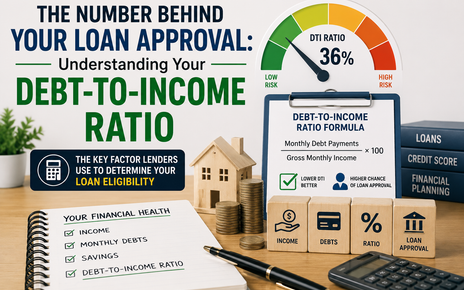
Your Debt-to-Income (DTI) Ratio: Lenders compare your total monthly debt payments against your gross monthly income. Most lenders cap the maximum DTI at roughly 43%. If you are heavily burdened with auto loans and credit card debt, you may be denied regardless of how much equity you have.
-
Loan-to-Value (LTV) Limits: As mentioned, lenders usually cap your total borrowing (your primary mortgage plus your new second mortgage) at 80% to 85% of your home’s total appraised value.
What Should You Use the Money For?
Just because you can borrow against your house does not mean you should. When you sign the paperwork for a HELOC or home equity loan, your home becomes the collateral. If you lose your job or default on the payments, the bank can foreclose on your property.
For this reason, financial experts strongly recommend using home equity only to build long-term wealth.
Smart Uses for Home Equity:
-
Major home renovations that increase property value (e.g., adding a bathroom, a major kitchen remodel, or a roof replacement).
-
Consolidating high-interest credit card debt, provided you have addressed the spending habits that caused the debt.
Dangerous Uses for Home Equity:
-
Funding a luxury vacation.
-
Buying a depreciating asset like a new car.
-
Covering everyday living expenses.
If you use your house to pay for a vacation, you could still be paying off that trip a decade after you return home—all while risking foreclosure over a leisure expense.
Quick Decision Guide: Which One Fits Your Need?
There is no universally “better” option; the right choice is entirely dependent on how you plan to deploy the capital.
Choose a Home Equity Loan if:
-
You need a specific, large sum of money all at once.
-
You are paying a single massive bill (like a roof replacement or debt consolidation).
-
You demand the strict budgeting certainty of a fixed interest rate and a fixed monthly payment.
Choose a HELOC if:
-
You are tackling an ongoing project with unpredictable costs over several months.
-
You want a financial safety net and only want to pay interest on the money you actually use.
-
You have the financial flexibility to absorb potential increases in a variable interest rate.
-
You plan to stay in your home long-term (selling a home requires you to instantly pay off the open HELOC balance).
Final Thoughts
Borrowing against your home equity is one of the most powerful financial levers available to homeowners. It generally offers much lower interest rates than personal loans or credit cards.
However, whether you choose the predictable lump sum of a home equity loan or the flexible revolving line of a HELOC, the golden rule remains the same: treat the debt with immense respect. You are putting your home on the line.
Before applying, calculate exactly how much money you truly need, stress-test your monthly budget to ensure you can easily afford the new payment, and aggressively shop around. You are never obligated to use the bank that holds your primary mortgage. Comparing multiple lenders is the single best way to minimize fees, avoid mandatory initial draw requirements, and secure the best possible rate.